
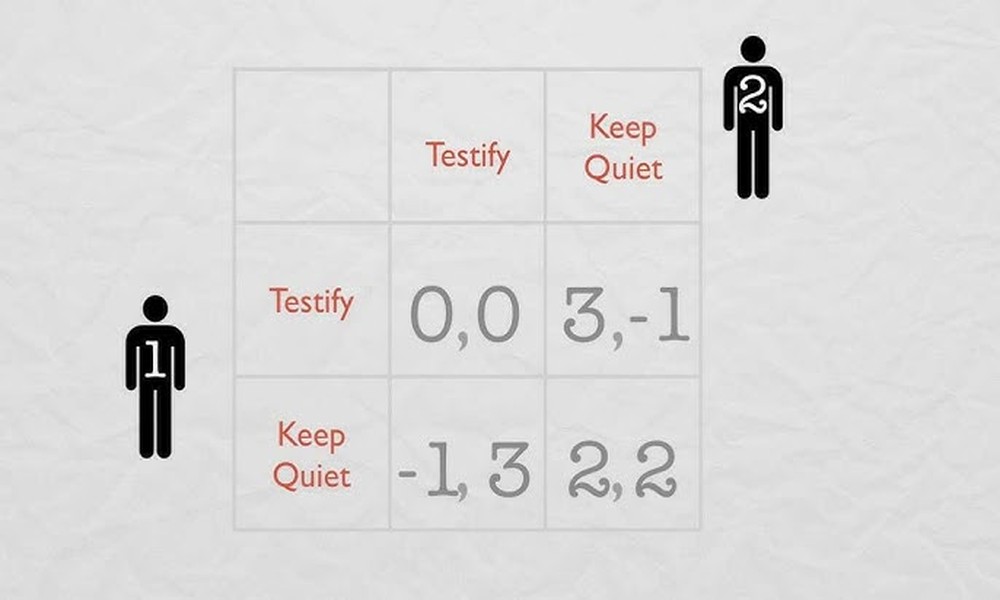
Nash Equilibrium is one of the most important ideas in game theory. It explains a situation in which each player chooses a strategy, and no one can improve their outcome by changing their decision alone. In simple terms, every player is doing the best they can based on what others are doing.
This concept is widely used in economics, business competition, pricing decisions, negotiations, politics, and even artificial intelligence. It helps us understand how rational decision-makers behave when their choices interact. For learners exploring strategic decision-making through an ai course in mumbai, Nash Equilibrium is a useful concept because it connects logic, competition, and prediction in a practical way.
In this article, we will understand what Nash Equilibrium means, how it works, where it is used, and what its limits are.
What Nash Equilibrium Means in Simple Terms
Nash Equilibrium happens when all players in a game choose strategies such that no player can get a better result by changing only their own strategy, while others keep their strategies unchanged.
A Simple Example
Imagine two competing shops in the same area. Each shop can choose either a high price or a low price.
- If both choose a high price, both earn a decent profit.
- If one chooses a low price while the other stays high, the low-price shop attracts more customers.
- If both choose a low price, both get a lower profit but remain competitive.
If both shops settle on a low price and neither can improve profit by changing to a high price alone, that point can be a Nash Equilibrium. Each shop’s choice is stable because changing alone makes things worse.
The key idea is stability in decision-making, not fairness or maximum profit.
Why Nash Equilibrium Matters in Strategy
Nash Equilibrium is useful because many real-world decisions are interdependent. A company, investor, or negotiator cannot decide in isolation. The best choice often depends on what others are expected to do.
1. It helps predict behaviour
When competitors react to each other, the Nash Equilibrium provides a framework to estimate likely outcomes. This is especially useful for pricing, bidding, and market-entry decisions.
2. It supports rational planning
Instead of asking, “What is best in general?”, it asks, “What is best given the choices of others?” This makes the strategy more realistic.
3. It applies beyond economics
The concept is used in network systems, cybersecurity, traffic routing, auctions, and machine learning environments where multiple agents interact.
Real-World Applications of Nash Equilibrium
Nash Equilibrium is not only a theory from textbooks. It appears in many practical situations.
Business Competition
Two brands launching similar products often adjust pricing, advertising, and discounts based on each other’s moves. Over time, they may reach a stable pattern where neither brand gains much by changing strategy alone.
For example, in online retail, sellers frequently match prices. If one seller increases the price while others do not, sales may drop. If everyone cuts prices too much, profit margins shrink. The equilibrium may not be ideal, but it can still be stable.
Traffic and Route Selection
In traffic systems, drivers choose routes to reduce travel time. If too many drivers switch to a “faster” road, congestion increases. Eventually, route choices may settle into a pattern where no single driver can save time by changing routes alone. This is a Nash-type outcome in transport planning.
Auctions and Bidding
In auctions, bidders decide how much to bid based on what they think others will bid. Strategic balance matters. A bidder who changes strategy without considering others may overpay or lose the auction.
AI and Multi-Agent Systems
In AI, especially reinforcement learning and multi-agent environments, agents make decisions while interacting with other agents. Nash Equilibrium helps design systems where agents learn stable behaviours. This is one reason the concept is often discussed in advanced modules of an ai course in mumbai, where strategic models are linked to intelligent systems.
Limits and Misunderstandings of Nash Equilibrium
Although Nash Equilibrium is powerful, it has limitations. Understanding these limits is important for correct application.
It does not always give the best collective outcome
A Nash Equilibrium can be stable but inefficient. The classic Prisoner’s Dilemma shows that players may choose strategies that are individually rational but collectively worse.
There can be multiple equilibria
Some games have more than one Nash Equilibrium. In such cases, predicting which one will happen becomes harder. Context, trust, communication, and past behaviour may influence the final outcome.
It assumes rational decision-making
The concept usually assumes players act logically and understand the game structure. In real life, people may act emotionally, with incomplete information, or out of habit.
It may be hard to compute in complex systems
In simple examples, finding equilibrium is easy. In large markets or AI systems with many agents and possible actions, identifying an equilibrium can become mathematically complex.
How to Think About Nash Equilibrium in Practice
To apply the Nash Equilibrium effectively, focus on three questions:
What are the available strategies?
List the possible actions for each player. Clear strategy definition is the first step.
What does each player gain or lose?
Understand payoffs, costs, risks, and likely reactions. Strategy depends on incentives.
Is any player motivated to change alone?
If the answer is no for all players, you may be looking at a Nash Equilibrium.
This approach helps in business planning, negotiations, and system design because it encourages structured thinking instead of guesswork.
Conclusion
Nash Equilibrium explains a stable strategic situation where no player benefits by changing their strategy alone. It is a foundational idea in game theory and a practical tool for understanding competition, cooperation, and decision-making in interconnected environments.
Its strength lies in showing how outcomes emerge when choices depend on others. At the same time, it should be used carefully because stable outcomes are not always optimal, and real-world behaviour is not always fully rational. When understood properly, Nash Equilibrium offers a clear and useful lens for analysing strategy in business, economics, and AI.