
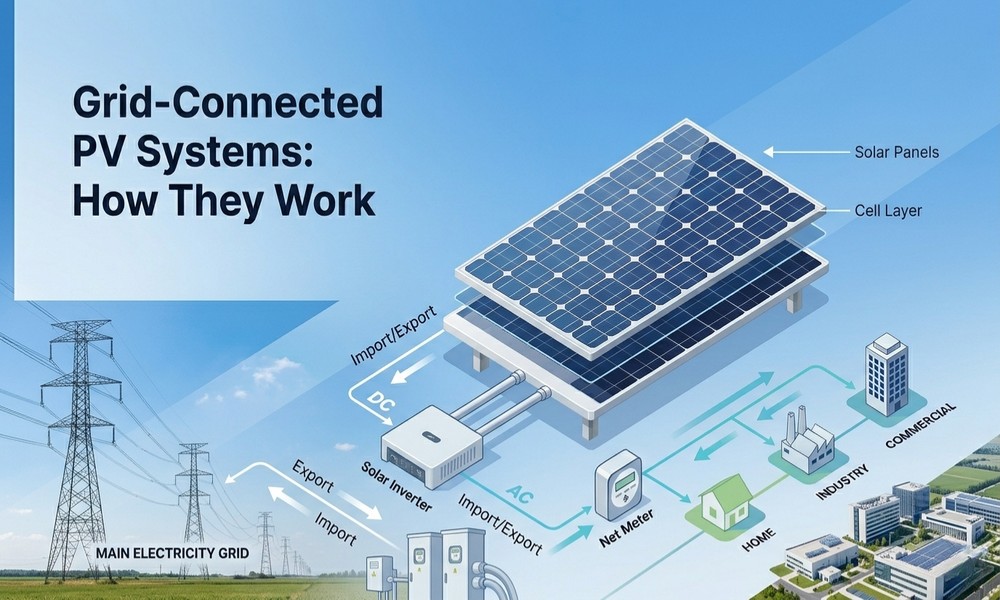
In a grid-connected PV system, also referred to as an on-grid or grid-tie solar power system, electrical energy is produced by the solar panels and then connected directly to the primary grid itself. Use electricity generated for yourself, feed the excess energy to the utility grid, and withdraw from it when your panels are unable to satisfy your demands. You don’t need batteries in an elementary system, nor will you have to pay anything for fuel or worry about complex installation and wiring.
India is one of those countries currently expanding its solar capacity at a very fast pace, largely due to the rapid adoption of such grid-connected systems, which happen to be affordable and convenient at the same time.
How it Works
The solar panels generate DC electricity, but it gets converted into AC using an inverter in order to power our household appliances. A bi-directional net meter keeps track of all your activities with the grid, recording how much electricity you’ve been generating and exporting as well as importing from it.
Key Components
The system needs solar panels, a solar inverter, a bidirectional net meter, mounting structures, and a grid connection. No batteries are required in a standard setup, which keeps the cost significantly lower than off-grid or hybrid alternatives and makes installation far less complex.
Types of Grid-Connected Systems
The standard on-grid system is the most affordable and widely installed type across Indian homes and businesses. A hybrid system adds battery backup for properties that face frequent power cuts, storing excess solar energy for use at night or during outages. For larger commercial and industrial projects, central inverter setups manage multiple panel strings from a single unit, making them more practical and cost-efficient at scale.
The Financial Case
Most grid-connected systems recover their investment within 3 to 5 years. With electricity tariffs in India rising by 3 to 6 percent every year, going solar sooner simply means bigger savings over time. On top of that, residential homeowners can claim central government subsidies of up to Rs. 78,000 under the PM Surya Ghar Muft Bijli Yojana, which brings the upfront installation cost down considerably. After the system pays for itself, the electricity it generates is essentially free for the remaining 20 plus years of its lifespan.
One Thing to Keep in Mind
A standard on-grid system without battery backup will shut down when the grid fails. This is actually an intentional safety feature to protect utility workers during line repairs. For homes in areas with frequent outages, a hybrid system with battery storage takes care of this completely.
Waaree Grid-Connected Solar Solutions
Waaree Energies Limited offers grid-connected solar systems designed for Indian conditions, whether that is coastal humidity, extreme summer heat, or dust-heavy environments. From residential rooftops to large commercial projects, Waaree brings the manufacturing depth and technical expertise to size and deliver the right system for your needs.