
Introduction
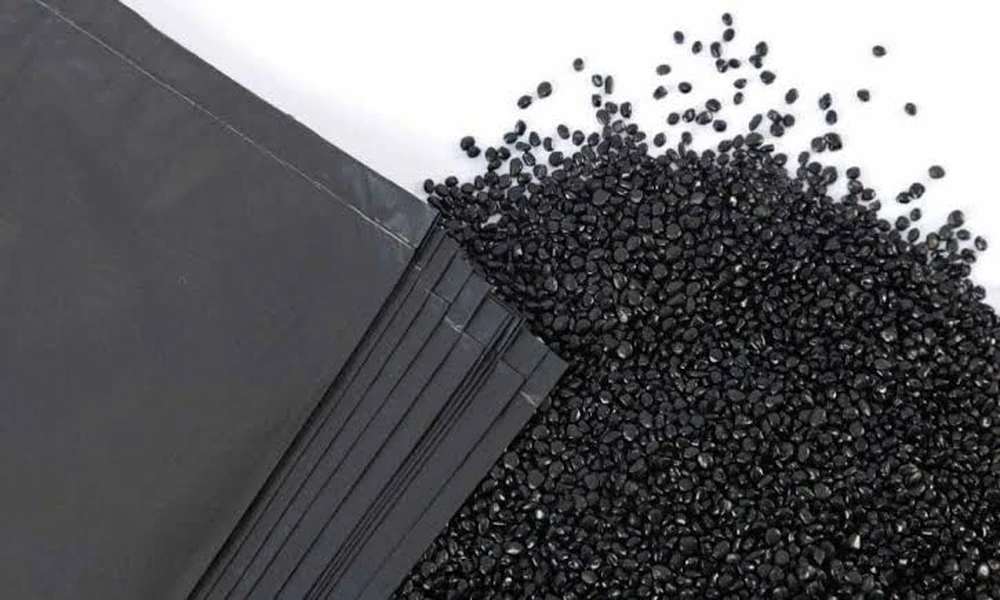
Carbon black is one of the most established pigments in plastic Industry, especially in black masterbatch formulations. It provides powerful, consistent color while contributing properties that can be valuable for durable products unprotected from sunlight and severe environments.
For plastic manufacturers, understanding the role of carbon black can help them select the appropriate plastic black masterbatch for color enhancement, extrusion, molding, film production, and other uses.
Carbon Black
This is a fine form of elemental carbon caused through the controlled thermal decomposition or incomplete combustion of hydrocarbon-based materials. It consists primarily of carbon and is available in different grades created for particular applications.
In plastic masterbatch, element black is included in a carrier that carries or transmits color, along with other additives.
Significance of Carbon Black
Dispersion is one of the main factors affecting the performance of carbon black masterbatch.
Good dispersion can support:
1. More uniform black hue
2. Better surface presentation
3. Consistent color classification
4. More certain processing
5. More uniform UV care
Manufacturers should accordingly consider dispersion rank when evaluating different bitter masterbatch products.
Carbon Black Particle Size and Performance
Carbon black is available in different particle sizes and grades. For this reason, manufacturers acknowledge the possibility of not selecting carbon black only by how black it appears. The necessary performance traits of the products should also be considered.
Choosing a Compatible Carrier Resin
Carbon black is an indiscriminate additive in a masterbatch formulation. The one that carries or transmits a sticky entity is also important. The carrier should fall into place accompanying the polymer being processed to support direct joining and dispersal. For example, a masterbatch designed for the polyolefin request may not, as a matter of usual practice, suit an engineering adaptable.
Manufacturers should confirm compatibility between the masterbatch supplier and the base polymer before production.
Applications of Carbon Black Masterbatch
1. Plastic pipes:
Black hue and potential UV safety are possibly valuable for outdoor pipe uses.
2. Agricultural assets:
Films and other land merchandise may demand resistance to prolonged light exposure for parts of 24 hours.
3. Automotive elements:
Black masterbatch is usually used for interior and exterior pliable parts.
4. Packaging:
Containers, caps, closures, and other wrap components can demand a black coloration.
5. Electrical devices:
Housings, cord-connected parts, and other plastic parts can use black masterbatch.
6. Consumer profit:
Household products can benefit from probable and attractive black finishes.
What Should Manufacturers Consider?
Before selecting a carbon black masterbatch, manufacturers should consider several determinants:
1. Base polymer type
2. Desired black shade and color intensity
3. Carbon black collection
4. Dispersion quality
5. Processing temperature
6. Required UV safety
7. Intended product use
8. Recommended portion or other products
Conclusion
Its success depends on various determinants, containing piece characteristics, aggregation, dispersion, carrier-difficult substances, polymer compatibility, and optimal conditions.
For manufacturers, selecting the right element inky masterbatch means appearing further color. Evaluating the logistics requirements of use and applying appropriate production troubles can help achieve consistent performance, reliable processing, and the desired performance in finished plastic products.