
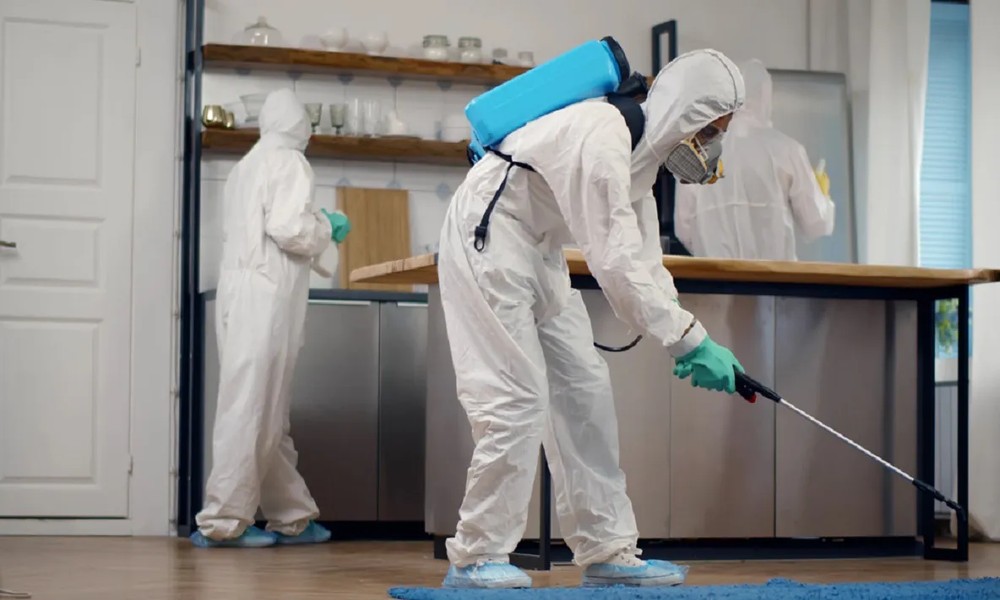
Running a commercial office building in Atlanta comes with a long list of responsibilities, and pest control probably isn’t the first thing on your mind – until there’s a problem. Then it becomes the only thing on your mind. A rodent sighting in a common area, cockroaches in the break room, or an ant trail across someone’s desk can damage tenant relationships, trigger complaints, and in some cases create liability exposure that’s entirely avoidable with the right programme in place.
Atlanta’s climate makes this more than just a routine checkbox. The heat, humidity, and mild winters that define the metro area create year-round pest pressure that office buildings – with their food sources, moisture, and high foot traffic – are particularly susceptible to. Here’s what property managers and facilities teams need to know about keeping commercial office spaces pest-free.
Why Office Buildings Are Vulnerable
Office buildings present a unique combination of conditions that make them attractive to pests in ways that differ from residential properties.
Multiple entry points. A commercial building has far more ways in than a house – loading docks, service entrances, elevator shafts, utility chases, HVAC penetrations, and dozens of doors with varying seal quality. Each one is a potential entry point for rodents, cockroaches, and insects. High foot traffic means doors are frequently opening and closing, and the gaps under poorly fitted doors get constant use.
Food and moisture. Break rooms and kitchens are the most obvious attractant, but vending machine areas, coffee stations, and even desk drawers with snacks are enough to sustain pest populations. Moisture from HVAC condensate lines, plumbing leaks, and poorly draining rooftop equipment creates the conditions cockroaches and silverfish need to establish themselves.
Clutter and storage. Server rooms, storage closets, filing archives, and rarely disturbed areas in basements or mechanical rooms provide ideal nesting sites for rodents and cockroaches. Areas that aren’t regularly cleaned or inspected are often where infestations establish themselves quietly before anyone notices.
Shared walls and adjacent tenants. In multi-tenant buildings, a pest problem in one suite can spread to others through shared wall voids, ceiling spaces, and utility chases. A food service tenant on the ground floor, for example, significantly raises the pest pressure for the entire building.
The Most Common Pests in Atlanta Office Buildings
Knowing what you’re most likely to encounter shapes an effective prevention and response strategy.
Cockroaches are the most common and most reputation-damaging pest in commercial office settings. German cockroaches in particular are well-adapted to commercial environments – they breed rapidly, hide in walls and under appliances, and are notoriously difficult to eliminate without professional treatment. American cockroaches, the larger species Atlantans often call waterbugs, typically enter from outdoors through drains and utility penetrations and are most common in basements, mechanical rooms, and restrooms.
Rodents – primarily house mice and Norway rats – are a significant concern in urban Atlanta office buildings, particularly those near restaurants, food distribution, or with ground-floor retail. Mice can enter through gaps as small as a dime and will establish themselves quickly in wall voids, drop ceilings, and storage areas near food sources.
Ants are a persistent nuisance. Odorous house ants and Argentine ants trail indoors in large numbers seeking food, and fire ant mounds in landscaped areas around the building can create issues at entry points and outdoor seating areas.
Flies – particularly drain flies and fruit flies – are common in break rooms, restrooms, and anywhere organic material accumulates in drains. They’re a sanitation issue as much as a pest issue and often signal a maintenance problem that needs addressing alongside the pest treatment.
Stored product pests like pantry moths and grain beetles can establish themselves in break room food supplies and vending machine areas, particularly if food isn’t stored in sealed containers.
What a Commercial Pest Control Programme Should Look Like
A reactive approach to pest control – calling a company when someone reports a sighting – is not an effective strategy for a commercial building. By the time a pest is visible in an occupied area, the infestation is typically already established and harder to address. A proactive, scheduled programme is the right framework.
Regular scheduled inspections and treatments. A quality commercial pest control programme includes routine visits on a defined schedule – monthly is standard for most Atlanta office buildings, with more frequent service for high-risk areas like kitchens, break rooms, and loading docks. Each visit includes an inspection of key areas, treatment where needed, and documentation of findings and activity levels.
Monitoring devices. Glue boards and monitoring stations placed in discreet locations throughout the building – along walls in mechanical rooms, behind break room appliances, near entry points – provide early warning of pest activity before it becomes visible to tenants. A spike in monitoring device catches tells a pest control professional something is changing and allows intervention before it escalates.
Integrated Pest Management (IPM). Reputable commercial pest control in Atlanta companies work within an IPM framework – emphasising prevention, monitoring, and targeted treatment rather than blanket pesticide application. In an occupied office environment this matters. Chemical treatments need to be applied in ways that don’t disrupt tenants or create exposure concerns, and a good IPM programme minimises pesticide use by addressing the conditions that support pests rather than just treating the symptoms.
Detailed reporting. Every service visit should generate a report documenting what was inspected, what activity was found, what treatments were applied, and any conditions or recommendations identified. This documentation is important for compliance purposes and invaluable for tracking trends over time.
Break Room and Kitchen Management
The break room is ground zero for commercial pest pressure, and the pest control programme only works as well as the sanitation practices that support it. This is a conversation worth having with building tenants and facilities staff.
Food should be stored in sealed hard-sided containers, not left in open bags or cardboard boxes. Rubbish bins should have lids and be emptied daily – not just when they’re full. Appliances should be cleaned regularly underneath and behind, not just on the visible surfaces. Spills should be cleaned promptly rather than left until the next scheduled cleaning.
Drains in break room sinks deserve particular attention. Organic buildup in floor drains and sink drains is a breeding site for drain flies and an attractant for cockroaches. Regular drain cleaning – either mechanically or with enzymatic drain treatments – keeps this under control.
A tenant education approach works better than enforcement. Most people are happy to follow reasonable guidelines when they understand the reasoning behind them, and framing it as protecting the building environment rather than criticising behaviour lands better.
Entry Point Management
Prevention at the building perimeter is the most cost-effective pest control investment a property manager can make. Reducing the ways pests can enter the building reduces everything downstream.
Door sweeps and weatherstripping on all exterior doors should be inspected regularly and replaced when worn. Loading dock doors and service entrances deserve particular attention – these are often the highest-traffic entry points and the least carefully maintained. Air curtains over frequently used entry doors are worth considering for buildings with high foot traffic or adjacent food service.
Pipe penetrations, utility entries, and gaps in the building envelope should be sealed with appropriate materials – metal mesh and caulk for smaller gaps, steel wool and foam or hardware cloth for larger ones. Rodents in particular are persistent at finding and exploiting structural gaps, and a professional inspection of the building perimeter is a worthwhile investment if rodent activity is a recurring issue.
Landscaping immediately adjacent to the building matters too. Dense plantings against the foundation, mulch beds that retain moisture, and overgrown vegetation near entry points all provide cover and harborage for pests moving toward the building. Maintaining a clear zone of gravel or pavement immediately against the foundation significantly reduces the pest pressure at the building perimeter.
Choosing the Right Commercial Pest Control Partner
Not every pest control company is equipped to service commercial office buildings effectively. The requirements are different from residential service – the scale is larger, the scheduling needs to work around tenant occupancy, and the documentation and reporting requirements are more demanding.
Look for a company with demonstrated commercial experience and specific experience with multi-tenant office buildings if possible. Ask about their IPM approach and how they handle treatment in occupied spaces. Review their reporting process – you want detailed written reports after every visit, not just a verbal update from the technician. Check whether they carry adequate commercial liability insurance. And look for a company that will work with you proactively rather than just responding to complaints.
A long-term relationship with a pest control partner who knows your building, its history, and its specific vulnerabilities is worth more than a slightly lower price from a company that treats every visit as a one-off job.
The Bottom Line
Pest control in a commercial Atlanta office building is a facilities management function that rewards investment in prevention and proactive management. The costs of a reactive approach – tenant complaints, reputational damage, emergency call-out fees, and the difficulty of addressing established infestations in occupied spaces – almost always exceed the cost of a well-structured ongoing programme.
Get the right partner in place, build good sanitation and maintenance habits among tenants and staff, address the building envelope systematically, and pest problems become the exception rather than the rule. In a city with Atlanta’s climate, that’s exactly the outcome worth planning for.
